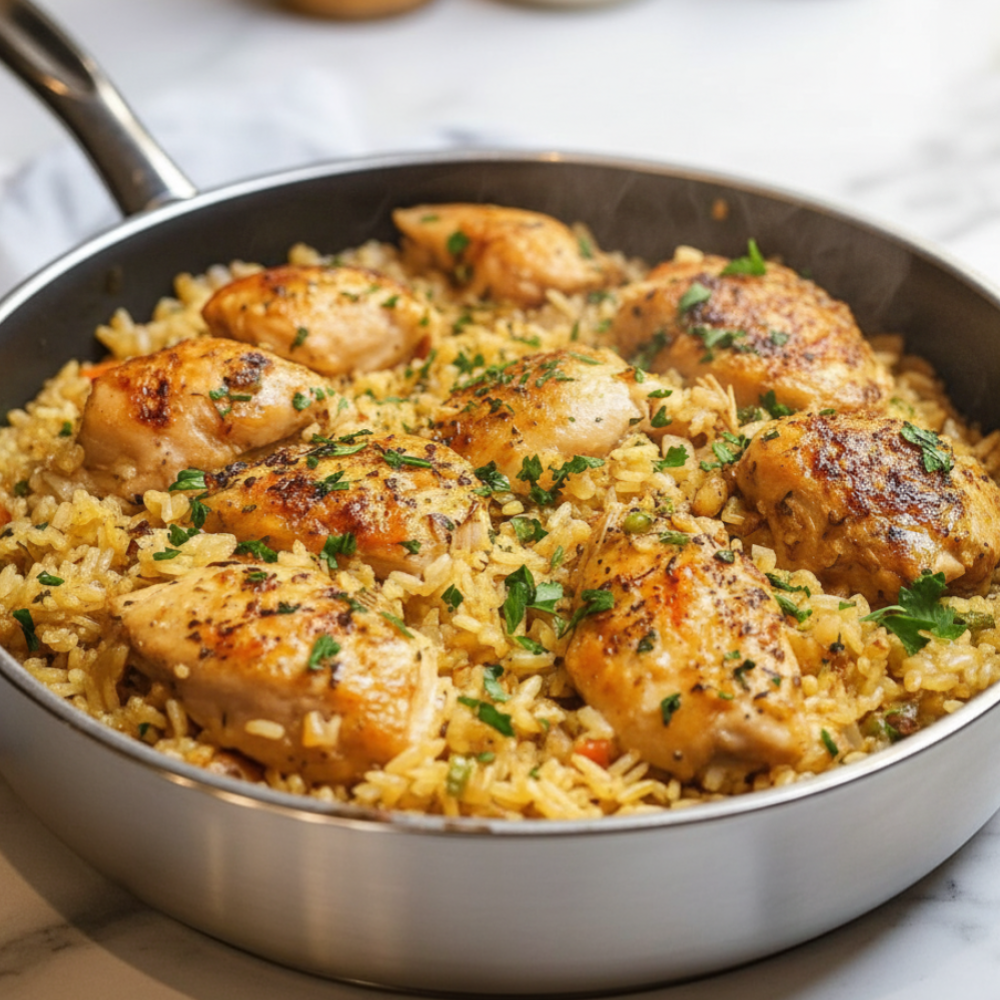
Enjoy a wonderful single-pan poultry and rice meal that is perfect for busy weeknights. This dish combines tender chicken with fragrant grains and vibrant vegetables, all simmered together to minimize cleanup and maximize flavor. This method delivers a complete and satisfying meal without extensive effort, making it a staple for any home cook seeking efficiency. The primary keyword “One Pot Chicken and Rice Pilaf” is at the core of this preparation, highlighting its convenience and delicious outcome.
Why This Skillet Meal Works
Cooking everything in a single skillet ensures that the grains absorb the rich flavors of the broth and the seared meat. This creates a depth of taste often missing in multi-pot preparations. It is a straightforward cooking method that requires minimal dishwashing while delivering a complete, balanced dinner. This efficient technique creates a comforting family dinner in just under forty minutes. The inherent simplicity of a stovetop chicken pilaf means less time at the sink and more time enjoying the meal with your family. This approach also concentrates flavors, leading to a more cohesive and deeply savory dish. It truly stands out as an easy chicken skillet meal, offering both convenience and robust flavor.
Essential Equipment
To get the best results for this single-pan chicken and rice recipe, you only need a few kitchen tools. Each plays a critical role in the success of the dish, ensuring even cooking and optimal flavor development.
- Large Skillet with a Tight-Fitting Lid: A heavy-bottomed pan, such as cast iron or stainless steel, is crucial for distributing heat evenly across the cooking surface. This prevents hot spots that can scorch ingredients or cook them inconsistently. The lid is equally important, as it traps steam inside the pan, which is essential for properly cooking the grains and ensuring the chicken remains tender. A snug fit prevents steam from escaping, maintaining the ideal cooking environment.
- Wooden Spoon or Spatula: This tool is invaluable for stirring and, more importantly, for scraping up any browned bits that naturally form on the bottom of the pan. These caramelized fragments, known as “fond,” are packed with intense flavor and dissolve into the broth during simmering, enriching the entire dish. Using a wooden or silicone utensil helps protect the surface of your skillet.
- Measuring Cups and Spoons: Precision is key in rice dishes. Accurately measuring the liquid-to-grain ratio is essential for achieving a perfectly fluffy texture and preventing either dry or mushy grains. These tools ensure you maintain the balance required for optimal results.
Ingredient Notes
Gathering the right components ensures a successful and flavorful dish. Each ingredient serves a specific purpose, contributing to the overall taste and texture of this skillet poultry dinner.
- Meat: Boneless, skinless chicken thighs are highly recommended for this recipe. Their higher fat content ensures they remain incredibly juicy and tender throughout the cooking process, even with sustained simmering. If you opt to use boneless, skinless chicken breasts instead, be mindful of the cooking time; they are leaner and can dry out more quickly. Cut the chicken into uniform pieces for even cooking. The robust flavor of the thighs complements the rice perfectly.
- Vegetables: Diced carrots and onions form the foundational aromatic base for this dish. When sautéed, they release sweet and savory notes that infuse the entire meal. These vegetables soften and meld into the pilaf, providing both flavor and texture. Frozen peas are added at the very end, contributing a vibrant pop of green color and a touch of fresh sweetness that brightens the rich savory profile. They warm through quickly, maintaining their texture and color.
- Grains: Long-grain white rice is ideal for achieving a fluffy, separated texture in this pilaf. Its structure ensures that the grains cook evenly and do not clump together. It is critical to rinse the rice thoroughly under cold running water before using it. This step removes excess surface starch, which is the primary cause of gummy or sticky rice. Rinse until the water runs clear, then drain well.
- Liquids and Seasonings: A good quality chicken broth is paramount, as it infuses the entire dish with savory depth. Using a low-sodium broth allows you to control the salt content precisely. Simple salt and black pepper are the primary seasonings, enhancing the natural flavors of the chicken and vegetables without overpowering them. Fresh parsley, chopped and stirred in at the end, provides a bright, herbaceous finish, adding a refreshing counterpoint to the cooked ingredients.
Step-by-Step Cooking Instructions
Follow these exact steps and measurements to achieve a perfectly cooked One Pot Chicken and Rice Pilaf. This recipe is designed for ease and flavor, ensuring a delicious outcome every time.
- Brown the Meat and Veggies: Heat 1 tablespoon of olive oil in a large skillet over medium-high heat. Add 1 pound of chopped chicken thighs, ½ cup of diced onion, and 1 cup of diced carrots. Cook for 5 to 7 minutes. The chicken should be lightly browned on all sides, and the onions should appear translucent and softened. This browning step is crucial for developing deep, savory flavors.
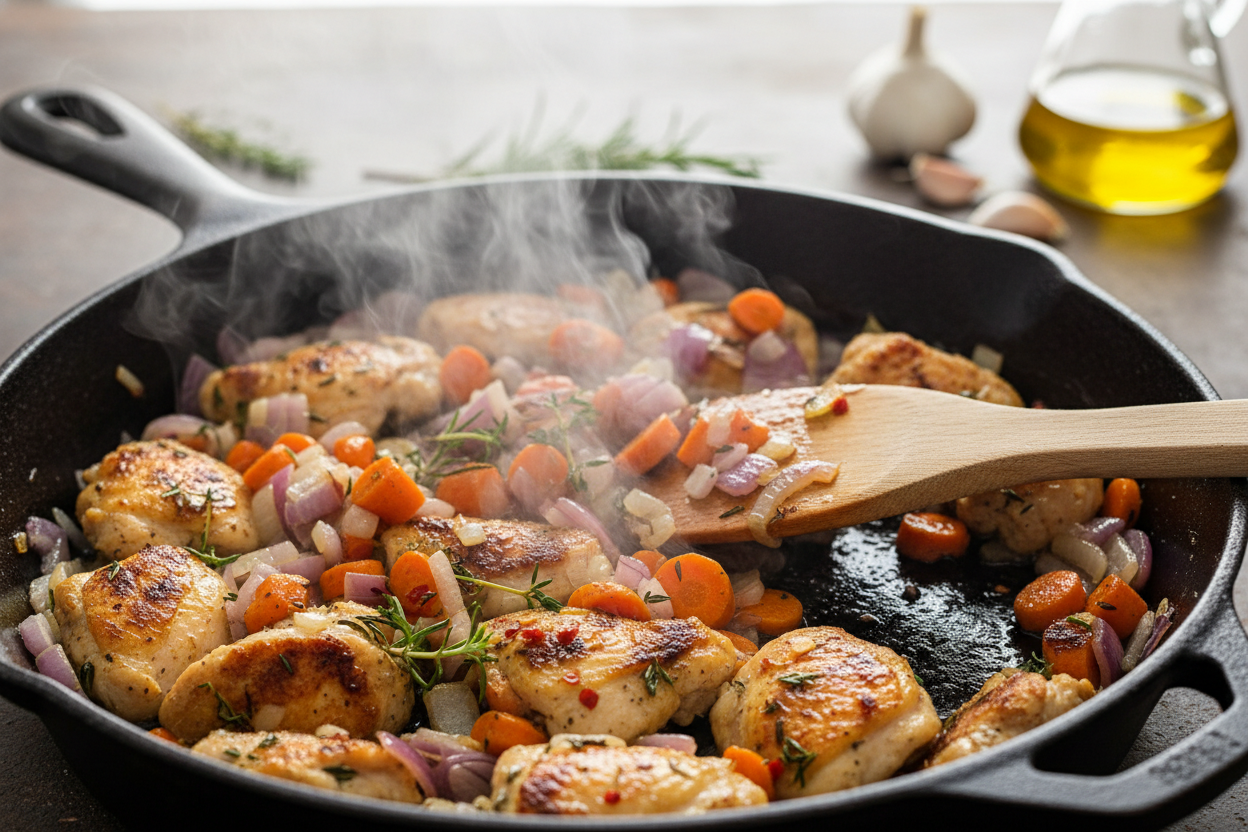
- Combine and Boil: Stir in 1 cup of rinsed white rice, 2 cups of chicken broth, 1 teaspoon of salt, and ½ teaspoon of black pepper. Use your wooden spoon or spatula to scrape the bottom of the pan, releasing any browned bits that have formed. These bits are full of flavor and will dissolve into the broth. Bring the entire mixture to a rolling boil over medium-high heat.
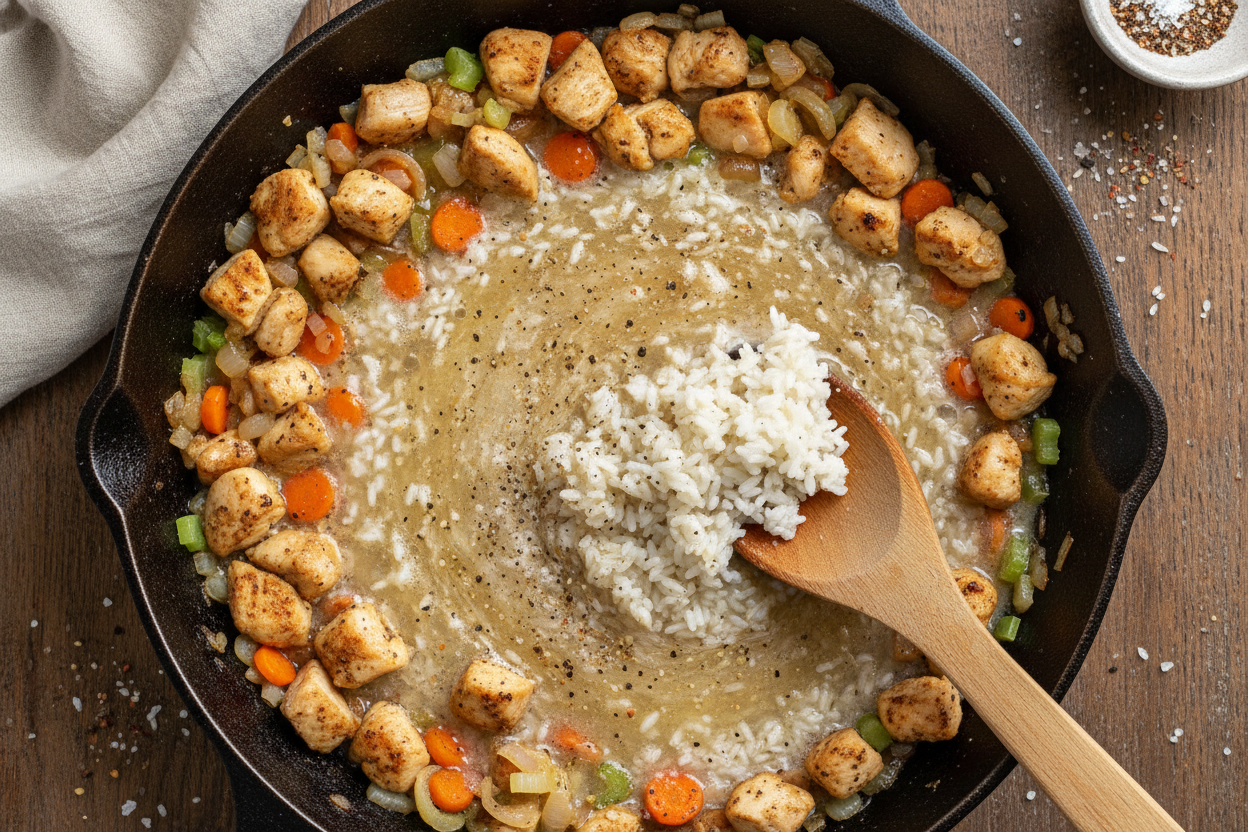
- Simmer: Immediately reduce the heat to low. Cover the skillet tightly with its lid. Let the mixture simmer undisturbed for 15 to 18 minutes. During this time, the rice will absorb the liquid and cook through. The grains should become tender, and the liquid must be fully absorbed. Avoid lifting the lid during this phase to maintain consistent steam.
- Rest and Add Peas: Remove the skillet from the heat. Quickly stir in ½ cup of frozen peas. The residual heat in the pan will warm them through without overcooking. Cover the skillet again and let it rest undisturbed for an additional 5 minutes. This resting period is vital for the grains to steam thoroughly and achieve their ideal texture.
- Garnish and Serve: Remove the lid. Gently fluff the mixture with a fork to separate the grains and incorporate all the ingredients evenly. Sprinkle 1 tablespoon of chopped fresh parsley on top for a burst of freshness and color. Serve warm as a complete weeknight rice dish.
Helpful Cooking Tips
Achieving the perfect texture and flavor for your One Pot Chicken and Rice Pilaf requires attention to a few key details. These tips are designed to ensure your dish turns out flawlessly every time.
- Rinse the Grains Thoroughly: This step cannot be overstated. Always wash your rice under cold running water in a fine-mesh sieve until the water that drains away runs completely clear. This process removes excess surface starch. Without it, the starch releases during cooking, creating a gummy or sticky texture in the finished pilaf. Properly rinsed rice yields light, fluffy, and separate grains.
- Do Not Peek While Simmering: Once the skillet is covered and simmering, resist the urge to lift the lid. Releasing the trapped steam interrupts the precise cooking environment inside the pan. This steam is essential for cooking the rice evenly and thoroughly. Each time the lid is lifted, steam escapes, causing temperature fluctuations and potentially resulting in crunchy, undercooked grains. Trust the process and the timing.
- Let It Rest: The five-minute resting period off the heat is a crucial, non-negotiable step. During this time, the remaining moisture within the pan redistributes evenly throughout the rice. This final steaming period allows the grains to fully swell and tenderize without becoming mushy. Skipping this step can lead to rice that is either too wet or unevenly cooked. The rest ensures the best possible texture for your pilaf.
Delicious Variations
While the classic One Pot Chicken and Rice Pilaf is a complete meal on its own, several simple additions can transform its flavor profile. These optional variations allow you to customize the dish to suit different preferences or available ingredients.
- Spicy Kick: If you enjoy a bit of heat, add a pinch of red pepper flakes or cayenne pepper along with the broth. Alternatively, a dash of your favorite hot sauce stirred in at the end can provide a pleasant warmth. Start with a small amount and adjust to your taste.
- Cheesy Finish: For a richer, creamier texture and an extra layer of flavor, stir in a handful of shredded sharp cheddar or Parmesan cheese right before serving. The residual heat will melt the cheese, creating a comforting finish.
- Alternative Veggies: The flexibility of this easy chicken skillet meal allows for various vegetable swaps. Instead of peas and carrots, consider diced bell peppers (any color), green beans, or sliced mushrooms. Introduce them during the browning phase with the chicken and onions to ensure they cook through.
- Herb Variations: If fresh parsley is not your preference, other fresh herbs can offer distinct flavor profiles. Fresh dill adds a bright, slightly tangy note that pairs wonderfully with chicken. Cilantro offers a pungent, citrusy aroma that can significantly alter the dish’s character. Experiment to find your favorite herbaceous touch.
Frequently Asked Questions
Understanding common queries about this skillet poultry dinner can help you achieve perfect results and adapt the recipe confidently.
Can I use brown grains instead of white?
Yes, brown rice can be used, but the cooking time and liquid requirements will change significantly. Brown rice typically needs about 40 to 45 minutes of simmering time. It also requires an extra half cup of broth to become fully tender due to its fibrous outer bran layer. Always check for tenderness before removing from heat.
How do I prevent the food from sticking to the bottom of the pan?
Using a heavy-bottomed skillet, such as cast iron or a thick stainless steel pan, is crucial. These pans distribute heat more evenly, which helps regulate the temperature across the bottom. Additionally, ensure you lower the heat to a gentle simmer immediately once the liquid boils. A very low, consistent heat prevents scorching. Avoiding stirring during the simmer phase also helps. A delicious, slightly crispy crust might form on the bottom, but it should release easily if not burned.
Can I freeze this dish?
While you can freeze leftovers of this one pot chicken and rice pilaf, cooked rice can sometimes become slightly mushy or have a drier texture upon thawing and reheating. The consistency may not be as ideal as when freshly prepared. For the best quality, it is generally recommended to enjoy this dish fresh or stored in the refrigerator.
Storing and Reheating Instructions
To maintain the quality of your One Pot Chicken and Rice Pilaf, properly store any leftovers. Transfer cooled portions to an airtight container and store them in the refrigerator for up to four days.
When reheating, you may find the rice has absorbed more moisture, becoming slightly dry. To restore its texture and prevent further drying, add a small splash of water or extra chicken broth to the container or pan. Warm it gently in the microwave, stirring occasionally, until heated through. Alternatively, reheat on the stovetop over low heat, ensuring to stir regularly to prevent sticking and promote even warming.
For more quick and flavorful recipes, follow our Facebook page.
One Pot Chicken and Rice Pilaf
Ingredients
- 1 lb boneless skinless chicken thighs cut into bite-sized pieces
- 1 tbsp olive oil
- 1 cup white rice long-grain, rinsed
- 1/2 cup onion diced
- 1 cup carrots diced
- 1/2 cup frozen peas
- 2 cups chicken broth
- 1 tsp salt
- 1/2 tsp black pepper
- 1 tbsp fresh parsley chopped
Instructions
- Heat 1 tbsp of olive oil in a large skillet over medium-high heat. Add 1 lb of chopped chicken thighs, 1/2 cup of diced onion, and 1 cup of diced carrots. Cook for 5 to 7 minutes until the meat is lightly browned on all sides and the onions are translucent.
- Stir in 1 cup of rinsed white rice, 2 cups of chicken broth, 1 tsp of salt, and 1/2 tsp of black pepper. Scrape the bottom of the pan to release any browned bits. Bring the entire mixture to a rolling boil.
- Reduce the heat to low immediately. Cover the skillet tightly with its lid, and let it simmer without stirring for 15 to 18 minutes. The grains should become tender and the liquid must be fully absorbed.
- Remove the skillet from the heat. Quickly stir in 1/2 cup of frozen peas to warm them through, then cover the skillet again and let it rest undisturbed for 5 minutes.
- Remove the lid, fluff the mixture gently with a fork, sprinkle 1 tbsp of chopped fresh parsley on top, and serve warm.
For more daily recipes and tips, follow us on Facebook!
Click here to join our community!