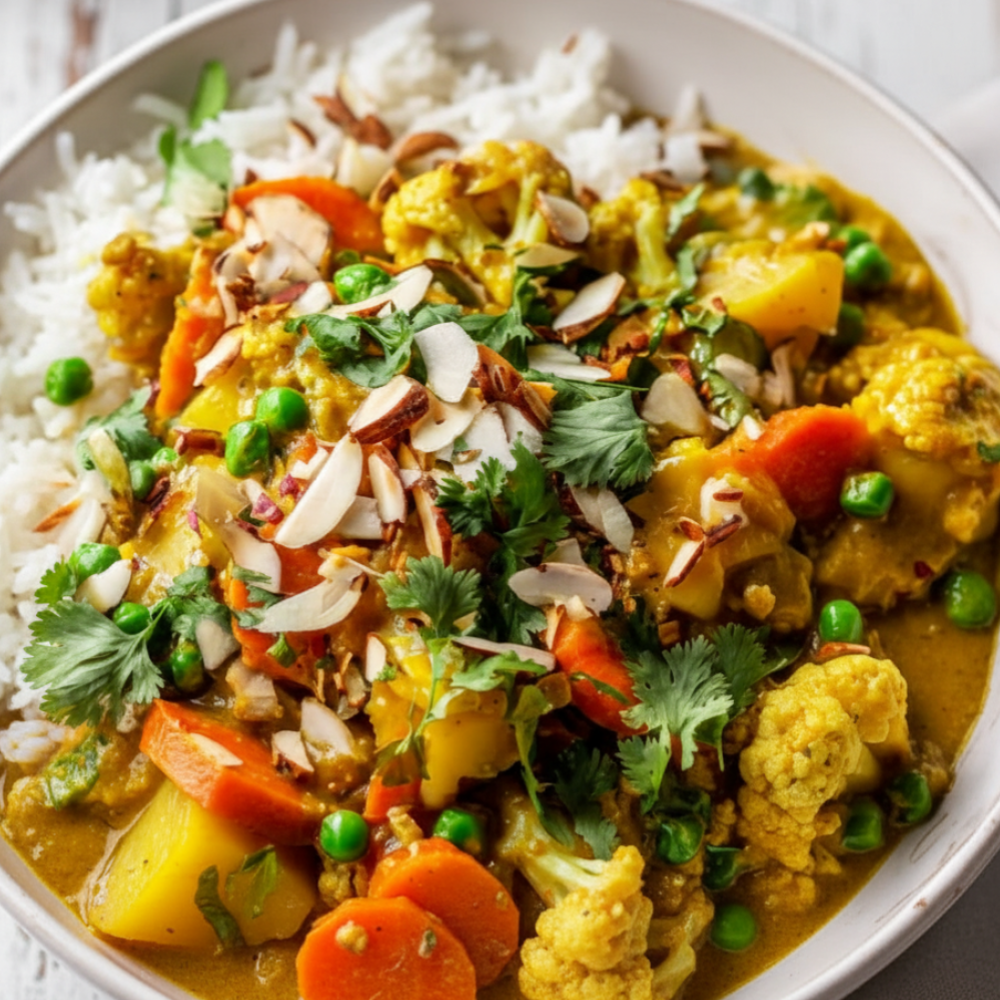
This Vegetable Korma Recipe brings a taste of authentic Indian cuisine into your home. It is a rich, creamy, and profoundly flavorful dish, crafted with a medley of tender vegetables bathed in a luscious coconut curry sauce. This vegetarian korma offers a satisfying, plant-based dinner that pairs perfectly with fluffy white rice. It is an ideal choice for an easy weeknight dinner, and naturally a delicious gluten-free Indian recipe option.
The Essential Ingredients
Crafting an authentic veg kurma relies on a precise combination of fresh produce, aromatic spices, and a rich liquid base. Each component plays a crucial role in building the deep, complex flavors of this Indian mixed vegetable curry.
The Aromatics
The foundation of any great curry begins with building a fragrant aromatic base. You will need 1 medium diced onion, carefully sautéed to achieve a translucent sweetness. Complementing this are 3 cloves of minced garlic and 1 tablespoon of minced fresh ginger, which provide pungent, warming notes essential to Indian cooking. These ingredients are slowly cooked to release their full flavor potential before the spices are added.
The Spices
Spices are the heart of this creamy coconut curry sauce. We use 1 tablespoon yellow curry powder, which contributes a vibrant color and a robust, earthy flavor profile. To deepen the warmth and complexity, 1 teaspoon garam masala is added. Garam masala is a blend of ground spices, typically including cinnamon, cardamom, cloves, and black pepper. Finally, 1/2 teaspoon turmeric powder not only lends its signature golden hue but also adds a subtle earthy bitterness and numerous health benefits. These spices are briefly toasted to unlock their essential oils and enhance their aroma.
The Liquid Base
The signature creaminess of this Vegetable Korma Recipe comes from its rich liquid base. We incorporate 1 cup full-fat canned coconut milk. The full-fat variety is crucial for achieving that characteristic velvety texture and sweet, tropical undertone. Alongside this, 1 cup vegetable broth is used to thin the sauce to the perfect consistency while adding a savory depth that balances the richness of the coconut milk. Together, these liquids create a smooth, luxurious sauce that coats every vegetable.
The Vegetables
A traditional korma celebrates a variety of textures and flavors from mixed vegetables. For this recipe, we use 1 cup diced potatoes, which become wonderfully tender and absorb the flavors of the sauce. 1 cup diced carrots add a touch of sweetness and a pleasing chew. 1 cup cauliflower florets provide a mild, slightly firm texture that holds up well in the curry. Finally, 1/2 cup green peas are stirred in at the end, offering bursts of freshness and vibrant color. These vegetables are cut into bite-sized pieces to ensure even cooking.
The Accompaniments
No Indian curry is complete without its traditional accompaniments. We recommend serving this curry over 2 cups cooked white rice, which acts as a neutral base to soak up all the rich sauce. For a delightful crunch and nutty flavor, 1/4 cup slivered almonds are sprinkled on top. Finally, a garnish of 2 tablespoons chopped fresh cilantro adds a bright, herbaceous finish that cuts through the richness of the curry.
Step-by-Step Cooking Instructions
Follow these clear, concise steps to create your perfect vegetarian korma.
1. Sautéing the Onion
Begin by heating 1 tablespoon of vegetable oil in a large pot or Dutch oven over medium heat. Once the oil is shimmering, add the 1 medium diced onion. Cook the onion for 4 to 5 minutes, stirring occasionally, until it becomes soft and translucent. This step is crucial for building a sweet and savory base for your veg kurma. Do not rush this process; proper caramelization of the onion will add significant depth to the final dish.
2. Cooking the Aromatics
Once the onion is softened, stir in the 3 cloves of minced garlic and 1 tablespoon of minced fresh ginger. Cook for about 1 minute, stirring continuously. You will notice a wonderful, fragrant aroma filling your kitchen as these aromatics toast gently. Be careful not to burn the garlic, as this can lead to a bitter taste. The goal here is to awaken their pungent flavors.
3. Toasting the Spices
Now, add the dry spices: 1 tablespoon yellow curry powder, 1 teaspoon garam masala, and 1/2 teaspoon turmeric powder. Stir them continuously into the onion, garlic, and ginger mixture for approximately 30 seconds. This short toasting period is vital for releasing the natural oils and enhancing the flavors and aromas of the spices, forming the backbone of your creamy coconut curry sauce. Keep the heat at medium to prevent the spices from burning.
4. Building the Broth
Carefully pour in the 1 cup of full-fat canned coconut milk and 1 cup of vegetable broth into the pot. Stir everything well to ensure all the spices and aromatics are fully combined with the liquids. Bring the mixture to a gentle simmer. This creates the rich and flavorful base for your Indian mixed vegetable curry. The full-fat coconut milk contributes significantly to the desired creamy texture.
5. Simmering the Vegetables
Add the 1 cup of diced potatoes, 1 cup of diced carrots, and 1 cup of cauliflower florets into the simmering liquid. Stir gently to ensure all the vegetables are submerged and coated in the creamy sauce. Cover the pot with a lid and let it cook for 15 to 20 minutes. During this time, the vegetables will soften and absorb the delicious flavors of the korma sauce. Periodically check to make sure the vegetables are cooking evenly and the sauce is not sticking. They should be tender when pierced with a fork.
6. Adding the Peas
Once the potatoes, carrots, and cauliflower are tender, stir in the 1/2 cup of green peas. Cook for an additional 2 minutes, uncovered, until the peas are heated through and vibrant green. Green peas cook quickly, so adding them at the end preserves their texture and fresh taste. This step completes the vegetable medley, adding another layer of color and sweetness.
7. Garnishing and Serving
Your authentic Vegetable Korma Recipe is now ready. Serve the warm Indian mixed vegetable curry generously over 2 cups of cooked white rice. For each serving, garnish with a sprinkle of the 1/4 cup slivered almonds, which add a delightful crunch and nutty flavor. Finish with a flourish of 2 tablespoons of chopped fresh cilantro for a burst of freshness and color. This dish is best enjoyed immediately, allowing all the warm, comforting flavors to shine.
Helpful Tips for the Best Veg Kurma
Achieving the perfect creamy, flavorful veg kurma is straightforward with a few key considerations. These tips will help ensure your dish is consistently delicious and authentic.
* Cutting the Veggies: Precision in vegetable preparation is important for even cooking. Make sure the potatoes, carrots, and cauliflower are cut into even, bite-sized pieces. This consistency ensures that all vegetables cook at roughly the same rate, preventing some from being overcooked while others remain underdone. Uniformity in size also makes for a more aesthetically pleasing and easier-to-eat dish.
* Coconut Milk Choice: The type of coconut milk you use profoundly impacts the texture and richness of your creamy coconut curry sauce. Always opt for full-fat canned coconut milk. This variety yields a far creamier, more luxurious sauce compared to the lighter, often watery carton varieties. The higher fat content provides a silky mouthfeel and helps the sauce thicken beautifully. Shake the can well before opening to combine the cream and water.
* Adjusting the Heat: This Vegetable Korma Recipe, as written, offers a mild and comforting flavor profile. If you prefer a spicier finish, you can easily customize the heat level. Add a pinch of cayenne pepper or a small amount of finely minced green chili along with the garlic and ginger. Start with a small amount and taste as you go, as the heat can build. Remember that korma is traditionally a milder curry, but personal preference always dictates.
For an even richer flavor profile, briefly toast the slivered almonds in a dry pan over medium-low heat until fragrant before garnishing. This enhances their nuttiness.
Storing and Reheating
Proper storage ensures your delicious Indian mixed vegetable curry remains fresh and flavorful for future meals. After enjoying your initial serving, allow any leftovers to cool completely to room temperature. Transfer the cooled veg kurma into an airtight container. It can be safely stored in the refrigerator for up to 4 days.
When you are ready to enjoy it again, reheat the korma gently. You can do this on the stovetop over medium-low heat, stirring occasionally, until it is warmed through. If the sauce has thickened too much during refrigeration, you may add a tablespoon or two of vegetable broth or water to reach your desired consistency. Alternatively, you can reheat individual portions in the microwave, stirring halfway through the heating process, until hot. Avoid overheating, as this can cause the vegetables to become mushy.
This Vegetable Korma Recipe offers a delightful and wholesome meal that brings comfort and flavor to any table. It is a testament to the rich tradition of Indian cooking, proving that plant-based dishes can be incredibly satisfying and deeply aromatic. Whether you are seeking an easy weeknight dinner or a special meal, this vegetarian korma is sure to become a favorite.
We love sharing delicious and approachable recipes. To stay updated with our latest culinary creations and cooking tips, be sure to follow our Facebook page. Join our community for more gluten-free Indian recipes and other exciting dishes.
Creamy Vegetable Korma
Ingredients
- 1 tbsp Vegetable oil or coconut oil
- 1 medium Onion diced
- 3 cloves Garlic minced
- 1 tbsp Fresh ginger minced
- 1 tbsp Yellow curry powder
- 1 tsp Garam masala
- 1/2 tsp Turmeric powder
- 1 cup Coconut milk canned, full-fat
- 1 cup Vegetable broth
- 1 cup Potatoes peeled and diced
- 1 cup Carrots diced
- 1 cup Cauliflower florets bite-sized
- 1/2 cup Green peas frozen or fresh
- 2 cups Cooked white rice for serving
- 1/4 cup Slivered almonds for garnish
- 2 tbsp Fresh cilantro chopped, for garnish
Instructions
- Heat the vegetable oil in a large pot over medium heat. Add the diced onion and sauté for 4 to 5 minutes until softened.
- Stir in the minced garlic and fresh ginger, cooking for 1 minute until fragrant.
- Add the yellow curry powder, garam masala, and turmeric powder. Stir continuously for 30 seconds to toast the spices.
- Pour in the coconut milk and vegetable broth, stirring well to combine. Bring the mixture to a gentle simmer.
- Add the diced potatoes, diced carrots, and cauliflower florets to the pot. Cover and cook for 15 to 20 minutes, or until the vegetables are fork-tender.
- Stir in the green peas and cook for an additional 2 minutes until heated through.
- Serve the warm vegetable korma over the cooked white rice, garnished with slivered almonds and fresh chopped cilantro.
For more daily recipes and tips, follow us on Facebook!
Click here to join our community!