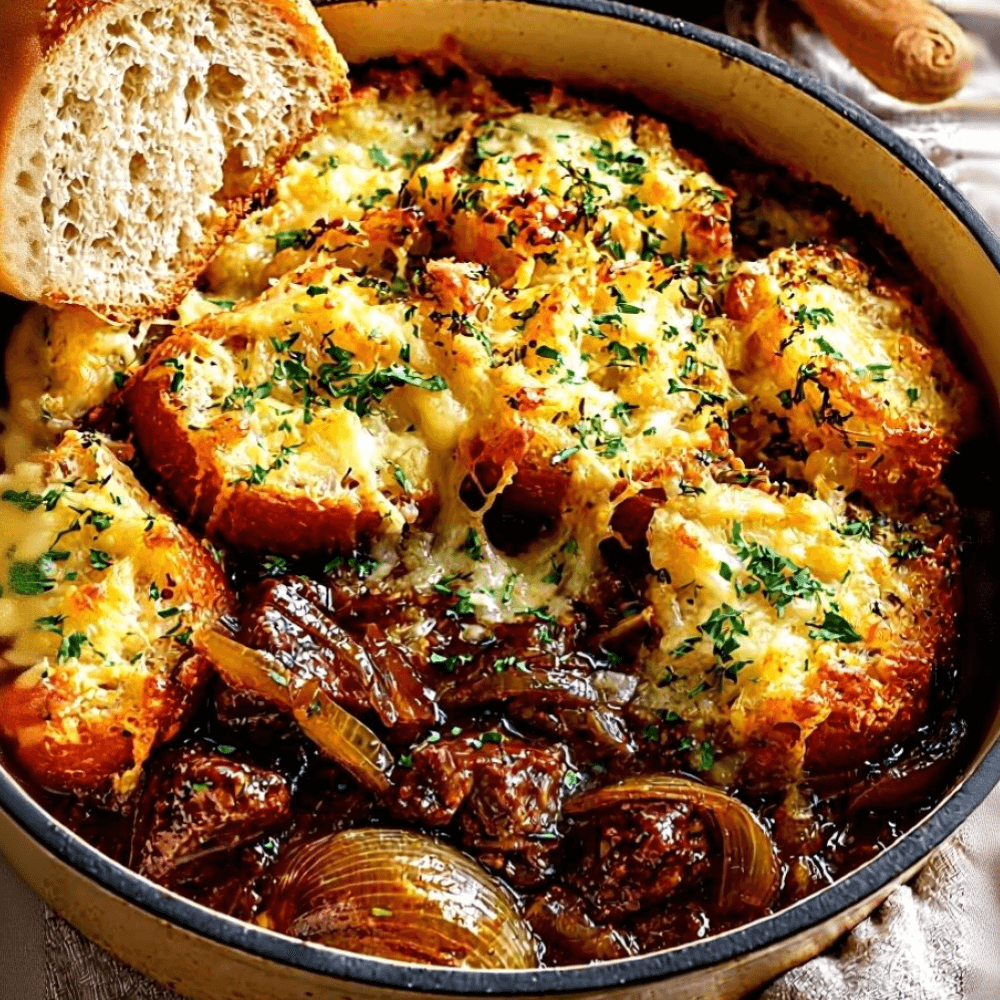
Imagine the rich, savory depth of classic French onion soup, fused seamlessly with the hearty, comforting embrace of a slow-cooked beef stew. That, my friends, is the culinary masterpiece we’re diving into today: French Onion Beef Stew. This isn’t just a meal; it’s an experience, a symphony of flavors and textures that will transport your taste buds straight to comfort food heaven. Get ready to elevate your dinner game with this utterly irresistible dish.
French Onion Beef Stew: The Ultimate Comfort Food Mashup
Why You’ll Love This Recipe
Best of Both Worlds: This innovative recipe truly captures the essence of both its inspirations. You get the rich, deeply savory, wine-infused broth that makes French onion soup so iconic, combined with chunks of fork-tender beef and a medley of aromatic vegetables found in the heartiest beef stews. It’s a sublime marriage that delivers more flavor and satisfaction than either dish alone.
Cheesy Perfection: What’s French onion soup without its signature cheesy topping? We’ve brought that indulgence right into our stew! Slices of crusty baguette, toasted until golden and draped with melted Gruyère, create a delightful, texturally varied crust over each serving. It’s the ultimate finish to a bowl of this magnificent beef stew with Gruyère croutons, adding a layer of creamy, salty, nutty bliss.
Budget-Friendly: Don’t let the gourmet presentation fool you. This dish expertly transforms humble, affordable ingredients – like onions and a sturdy beef chuck roast – into an incredibly luxurious meal. It’s a testament to the power of slow cooking and careful preparation, proving that you don’t need expensive cuts to create extraordinary comfort food dinner ideas that impress and nourish.
Key Ingredients for Success
The Beef: For a truly exceptional stew, the best beef cut for stew is undoubtedly beef chuck roast. Its abundant marbling and connective tissue are precisely what you want. While it starts tough, during a long, slow simmer, this collagen breaks down into gelatin, resulting in incredibly tender, succulent chunks of beef that practically melt in your mouth. Avoid leaner cuts, as they tend to dry out and become stringy during the extended cooking time necessary for a rich stew.
The Onions: The soul of this dish lies in the onions. We recommend using yellow onions for their balanced sweetness and robust flavor. When caramelized slowly, they develop an incredible depth of flavor and a beautiful golden-brown hue, forming the sweet and savory foundation of our caramelized onion beef stew.
The Cheese: The quintessential choice for our cheesy topping is Gruyère cheese. Hailing from Switzerland, Gruyère boasts a complex, nutty, and slightly sweet flavor profile that melts beautifully and browns to a perfect crisp. While Swiss cheese (Emmentaler) can be a good substitute, Gruyère typically offers a more pronounced flavor and superior melting qualities, making it the preferred choice for this specific application.
The Wine: A dry red wine, such as a Cabernet Sauvignon, Merlot, or Pinot Noir, is absolutely essential. It not only adds a crucial layer of deep, complex flavor to the broth but also plays a vital role in deglazing the pot, lifting all those delicious browned bits (fond) from the bottom, which are packed with incredible savory goodness. This is a non-negotiable step for authentic flavor development in your slow cooked beef and onion stew.
The Art of Caramelizing Onions
Caramelizing onions is more than just cooking them; it’s a transformative process that unlocks their natural sweetness and creates the essential backbone of flavor for your French Onion Beef Stew. It requires patience, but the payoff is immense.
Low and Slow: This is the golden rule. Resist the urge to rush the process with high heat. Cooking onions over medium-low heat allows their sugars to gradually caramelize without burning. This slow transformation develops that deep amber color and complex sweet-savory flavor profile that makes French onion soup so irresistible. Expect this step to take anywhere from 30 to 45 minutes, sometimes even longer.
Butter vs. Oil: For the best results, use a combination. Start with a neutral oil (like olive or canola) for its higher smoke point, which helps prevent burning at the beginning. Once the onions have started to soften, add a generous knob of butter. The butter not only adds a rich, luxurious flavor but also aids in the caramelization process, lending a beautiful sheen and depth to the onions.
Patience Pays Off: Don’t underestimate this step. The difference between merely sautéed onions and truly caramelized ones is monumental. Stir them frequently, but not constantly, allowing them to gently brown before turning them. As they cook down, they’ll release moisture, soften, and slowly turn from opaque to translucent, then to golden, and finally to a rich, deep amber. This deep, sweet, concentrated flavor is the soul of your French onion soup beef casserole.
Step-by-Step Instructions
Crafting this hearty stew is a labor of love, but each step builds layers of flavor that are truly worth the effort. Here’s a concise guide to bringing your French Onion Beef Stew to life:
Searing the Beef: Begin by seasoning your cubed beef chuck generously. In a large Dutch oven or heavy-bottomed pot, heat a touch of oil over medium-high heat. Sear the beef in batches until beautifully browned on all sides. This crucial step not only locks in flavor but also creates a rich “fond” (browned bits) at the bottom of the pot, which will contribute immense depth to your stew.
Building the Base: Remove the seared beef and set aside. Reduce the heat to medium-low and add your thinly sliced yellow onions to the pot. Cook them slowly and patiently, stirring occasionally, for 30-45 minutes until they achieve a deep, rich caramelized amber color. Once the onions are perfectly caramelized, pour in the red wine to deglaze the pot, scraping up all those flavorful brown bits from the bottom. Let the wine simmer for a few minutes to reduce slightly.
The Simmer: Return the seared beef to the pot. Add beef broth, a bay leaf, fresh thyme, and any additional seasonings. Bring the mixture to a gentle simmer, then reduce the heat to low, cover the pot, and cook for at least 2.5 to 3 hours, or until the beef is incredibly fork-tender. This slow cooking time is essential for developing the deep flavors and achieving that signature melt-in-your-mouth texture that defines truly great slow cooked beef and onion stew. Taste and adjust seasonings as needed.
The Grand Finale: While the stew is simmering, slice a baguette and lightly toast the pieces. Just before serving, ladle the hot stew into oven-safe bowls. Top each serving with a toasted baguette slice, then generously sprinkle with grated Gruyère cheese. Place the bowls under a preheated broiler for 2-4 minutes, or until the cheese is bubbling, melted, and beautifully golden brown. Serve immediately and enjoy the spectacular Dutch oven beef recipes masterpiece!
Expert Tips for Tender Beef
Achieving perfectly tender, succulent beef is the hallmark of an exceptional stew. Follow these expert tips for guaranteed success:
Cut Size Matters: When preparing your beef chuck, aim for uniform 1.5 to 2-inch cubes. This consistency ensures that all pieces cook evenly and become tender at the same rate. Irregularly sized pieces can lead to some being overcooked and dry, while others are still tough.
Don’t Rush: Patience is your greatest ally when making stew. The magic of tender beef comes from a long, gentle simmer. This allows the tough connective tissues in the chuck roast to slowly break down into gelatin, resulting in that desirable melt-in-your-mouth texture. Resist the urge to crank up the heat; a steady, low simmer is key to a truly magnificent winter warming stew recipes result.
Acid is Key: Incorporating an acidic component into your stew base not only adds brightness and balances the rich flavors but also helps to tenderize the beef. The dry red wine used for deglazing is an excellent choice for this. Alternatively, a small splash of balsamic or red wine vinegar towards the end of cooking can also contribute to the beef’s tenderness and enhance the overall depth of flavor.
Serving Suggestions & Sides
Salad Pairings: To balance the richness of the stew, a crisp, vibrant green salad is an ideal counterpoint. A simple arugula salad tossed with a bright lemon vinaigrette provides a refreshing contrast, cutting through the savory flavors beautifully.
Wine Pairing: Continue the theme of robust flavors with a well-chosen wine. A full-bodied Cabernet Sauvignon or a rich Pinot Noir would complement the savory beef and deep broth perfectly, echoing the wine used in the stew itself.
Alternative Toppings: If Gruyère isn’t your preference or you’re looking for variety, consider other delicious toppings. Garlic-rubbed toasted bread can add a pungent kick, or delicate Parmesan crisps could offer a salty, umami crunch without the bread.
Storage and Reheating
This French Onion Beef Stew tastes even better the next day, making it an excellent candidate for meal prep.
Fridge vs. Freezer: Allow the stew to cool completely before transferring it to an airtight container. It will keep beautifully in the refrigerator for up to 3-4 days. For longer storage, this stew freezes exceptionally well. Portion it into freezer-safe containers or bags and freeze for up to 3 months. Critically, always store any cheesy bread topping separately to prevent it from becoming soggy.
Reheating: When reheating from the fridge, gently warm the stew on the stovetop over low heat, stirring occasionally, until heated through. Alternatively, microwave individual portions. If reheating from frozen, thaw in the refrigerator overnight, then reheat as above. For best results, prepare fresh cheesy croutons just before serving to maintain that delightful crispness and melted cheese perfection.
FAQ
Can I make this in a slow cooker?
Yes, absolutely! After searing the beef and caramelizing the onions on the stovetop (these steps are crucial for flavor development), transfer them to your slow cooker. Add the remaining liquid ingredients and seasonings, then cook on low for 6-8 hours or on high for 3-4 hours, or until the beef is wonderfully tender. Top with cheesy croutons just before serving.
What can I substitute for red wine?
If you prefer to omit alcohol, you can substitute the red wine with an equal amount of good quality beef broth combined with 1 tablespoon of red wine vinegar or balsamic vinegar. This will help provide some of the acidity and depth that the wine offers.
Is this recipe gluten-free compatible?
To make this French Onion Beef Stew gluten-free, ensure your beef broth is certified gluten-free. For the topping, use gluten-free baguette or a gluten-free crusty bread alternative. The rest of the ingredients are naturally gluten-free.
French Onion Beef Stew with Cheesy Bread Topping
Ingredients
- 2 lbs Beef chuck roast cut into 1.5-inch cubes
- 4 large Yellow onions thinly sliced
- 4 tbsp Unsalted butter divided
- 2 tbsp Olive oil for searing
- 1/4 cup All-purpose flour divided
- 4 cloves Garlic minced
- 1 cup Dry red wine Cabernet or Merlot
- 4 cups Beef broth low sodium preferred
- 1 tbsp Worcestershire sauce
- 1 tsp Fresh thyme leaves plus more for garnish
- 2 whole Bay leaves
- 1 loaf Baguette sliced into 1-inch rounds
- 1.5 cups Gruyère cheese shredded
Instructions
- Pat the beef cubes dry with paper towels and season generously with salt and pepper. Toss with 2 tablespoons of flour to coat lightly.
- Heat the olive oil in a large Dutch oven or heavy-bottomed pot over medium-high heat. Sear the beef in batches until browned on all sides. Remove the beef and set aside.
- Reduce the heat to medium. Add the butter to the pot. Add the sliced onions and cook, stirring occasionally, for 30 to 45 minutes until they are deeply caramelized and jammy. Adjust heat as needed to prevent burning.
- Stir in the minced garlic and the remaining flour. Cook for 1 minute until fragrant.
- Pour in the red wine to deglaze the pan, scraping up any browned bits from the bottom. Simmer for 3 minutes to allow the alcohol to cook off.
- Return the beef and any accumulated juices to the pot. Add the beef broth, Worcestershire sauce, thyme, and bay leaves.
- Bring the mixture to a boil, then reduce heat to low. Cover and simmer for 1.5 to 2 hours, or until the beef is fork-tender. Remove and discard the bay leaves.
- Preheat your oven broiler. If your pot isn't oven-safe, ladle the stew into oven-safe soup crocks.
- Top the stew with the baguette slices. Mound the shredded Gruyère cheese generously over the bread.
- Place under the broiler for 3 to 5 minutes, watching closely, until the cheese is melted, bubbly, and golden brown. Serve immediately garnished with fresh thyme.
For more daily recipes and tips, follow us on Facebook!
Click here to join our community!