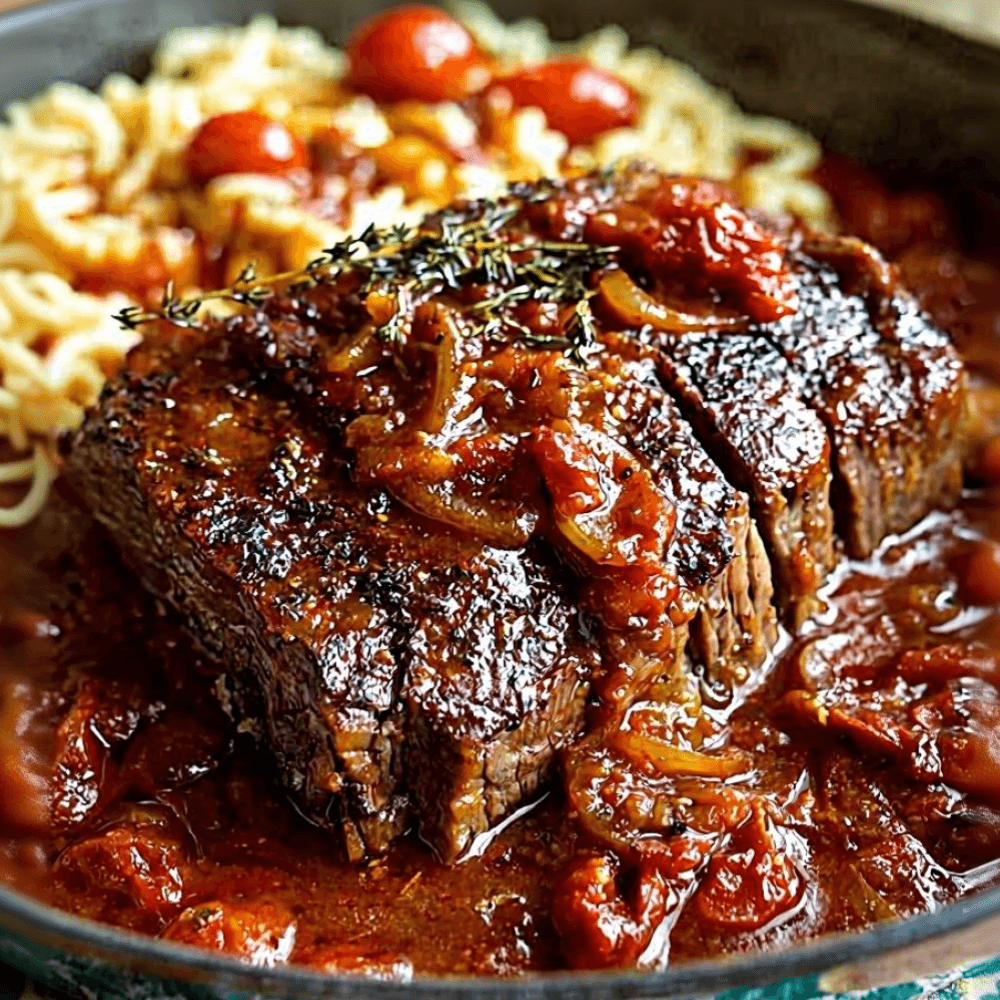
The Ultimate Braised Beef Roast Guide
Introduction
There’s an undeniable magic that happens in the kitchen when rich, savory aromas begin to waft, signaling a meal that promises warmth, comfort, and pure indulgence. Few dishes capture this essence quite like a beautifully Braised Beef Roast. This is the epitome of slow-cooked comfort food, a culinary embrace that transforms humble ingredients into something extraordinary. Perfect for a cozy Sunday dinner or a special gathering, it’s a dish that feeds both body and soul.
What truly elevates this dish to legendary status is the accompanying rich, deeply flavored tomato and onion gravy. As the beef braises low and slow, it releases its succulent juices, mingling with aromatic vegetables and a touch of acidity to create a sauce that is velvety, robust, and utterly irresistible. This isn’t just a meal; it’s an experience, a cornerstone of memorable gatherings, and one of our all-time favorite slow cooked beef recipes.
Choosing the Best Cut of Beef
The secret to a melt-in-your-mouth braised beef roast begins with selecting the right cut. Not all beef is created equal when it comes to the long, gentle cooking process of braising.
Chuck Roast: The Gold Standard for Braising
When it comes to braising, the beef chuck roast is truly the undisputed champion. Cut from the shoulder, this hardworking muscle is rich in connective tissue. While this makes it tough for quick cooking methods, it’s precisely what makes it ideal for braising. Over hours of low and slow heat, that connective tissue breaks down into gelatin, infusing the meat with incredible moisture and a buttery tenderness that makes it fall apart with just a fork. A good beef chuck roast recipe thrives on this transformation.
Brisket & Short Ribs: Alternative Options
While chuck roast is king, other cuts also excel in a braise. Brisket, especially the flat cut, can yield incredibly tender results, though it typically requires a slightly longer cooking time due to its denser muscle fibers. Beef short ribs are another fantastic choice, offering a smaller, individual portion with a rich bone-in flavor that intensifies the entire dish. Both of these cuts benefit immensely from the techniques outlined in this braising meat guide.
Marbling Matters: Why Fat Content is Crucial for Tenderness
Regardless of the specific cut you choose, pay close attention to the marbling – the intramuscular streaks of fat visible within the meat. Marbling is absolutely crucial for tenderness and flavor. As the beef braises, this fat renders, basting the meat from within, keeping it moist, and contributing to that desirable rich, succulent texture. Don’t shy away from a well-marbled piece of beef; it’s a sign of a superior roast that will reward your patience with unparalleled flavor and tenderness.
The Science of Braising
Braising isn’t just cooking; it’s a culinary art form rooted in science, transforming tough cuts of meat into tender, flavorful masterpieces. Understanding these key steps is essential for any successful Dutch oven pot roast.
Searing: Creating the Maillard Reaction for Flavor Depth
The first critical step in braising is searing the beef. This isn’t just about browning; it’s about initiating the Maillard reaction. This complex chemical process, which occurs when amino acids and reducing sugars react at high temperatures, creates hundreds of new flavor compounds, giving the surface of the beef a deep, savory, complex taste and a beautiful crust. This initial searing lays the fundamental flavor foundation for your entire dish, significantly enhancing the overall depth of your Braised Beef Roast.
Deglazing: Lifting the Fond (Browned Bits) for a Rich Sauce
After searing, you’ll notice delicious browned bits stuck to the bottom of your pot – this is called the fond. These caramelized morsels are pure flavor gold. Deglazing involves adding a liquid, usually wine or broth, to the hot pan to scrape up and dissolve these bits. As the liquid simmers, it lifts the fond, incorporating all those incredible complex flavors directly into your sauce. This step is non-negotiable for creating a truly rich, multi-dimensional gravy.
Low and Slow: Breaking Down Connective Tissue into Gelatin
Once seared and deglazed, the beef is submerged in liquid, covered, and cooked at a low temperature for several hours. This “low and slow” approach is the heart of braising. The gentle, moist heat gradually breaks down the tough collagen and other connective tissues in the beef. As these tissues dissolve, they transform into gelatin, which then coats the muscle fibers, making the meat incredibly tender, moist, and succulent. This scientific process is what gives comfort food beef recipes like this their signature fall-apart texture.
Ingredients & Variations
While the beef is the star, the supporting cast of ingredients plays a vital role in building the incredible flavors of your Braised Beef Roast.
The Aromatics: Onions, Garlic, and Fresh Thyme
- Onions: Sliced or chopped onions form the sweet and savory base of the gravy, softening and caramelizing as they cook.
- Garlic: Minced garlic adds a pungent, aromatic kick that permeates the entire dish.
- Fresh Thyme: Earthy and slightly peppery, fresh thyme sprigs are perfect for infusing a classic, rustic herb flavor. Rosemary or bay leaves can also be excellent additions.
The Acid: Using Tomatoes and Red Wine to Balance Richness
Acidity is crucial for balancing the richness of the beef and deepening the flavor profile of the gravy. It also aids in the tenderizing process.
- Tomatoes: Crushed tomatoes, tomato paste, or even diced fresh tomatoes provide a beautiful tang and sweetness, forming the backbone of the luscious tomato beef gravy. Tomato paste, in particular, adds concentrated umami.
- Red Wine: A dry red wine (like Cabernet Sauvignon or Merlot) adds complexity, depth, and another layer of acidity. It’s fantastic for deglazing and infusing a sophisticated flavor.
- Beef Broth: This is the primary braising liquid, providing moisture and reinforcing the beefy flavor. Choose a high-quality, low-sodium broth.
Substitutions: Using Broth Instead of Wine, Gluten-Free Options
You can easily adapt this recipe to dietary preferences:
- Broth Instead of Wine: If you prefer to cook without alcohol, simply substitute the red wine with an equal amount of good quality beef broth. A splash of red wine vinegar can be added for a hint of acidity if desired.
- Gluten-Free Options: To thicken the gravy, you can use a cornstarch slurry instead of flour (mix 1 tbsp cornstarch with 2 tbsp cold water, then whisk into hot gravy until thickened). Ensure your beef broth is certified gluten-free.
Serving Suggestions
A magnificent Braised Beef Roast deserves equally magnificent accompaniments to soak up every last drop of that incredible gravy.
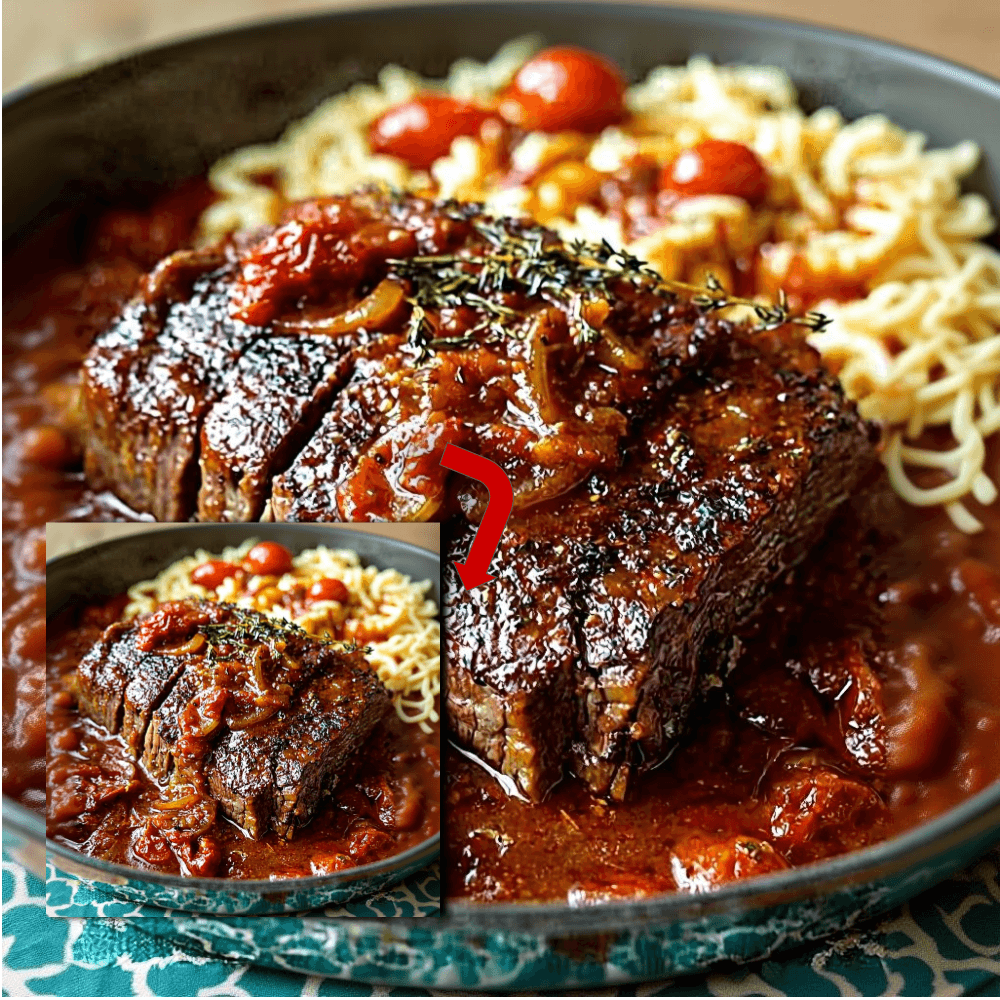
Classic Pasta: Pappardelle or Wide Egg Noodles
One of the most divine ways to enjoy braised beef is tossed with pasta. The wide, flat surface of pappardelle or hearty wide egg noodles is perfect for clinging to the rich, shredded beef and its velvety gravy. This combination elevates the dish into a sumptuous beef ragu with pasta, reminiscent of old-world Italian comfort food. It’s truly a standout among Sunday dinner ideas.
Low-Carb Options: Mashed Cauliflower or Roasted Root Vegetables
For those seeking low-carb alternatives, the beef roast pairs beautifully with:
- Mashed Cauliflower: A creamy, buttery mashed cauliflower provides a wonderful, light base that soaks up the gravy without the carbs of potatoes.
- Roasted Root Vegetables: Carrots, parsnips, and potatoes roasted alongside the beef in the last hour or so of cooking will absorb the flavors and create a hearty, wholesome side dish.
Crusty Bread: Essential for Soaking Up the Tomato Herb Gravy
Never underestimate the power of good bread. A rustic, crusty loaf of artisanal bread is absolutely essential for mopping up every last drop of the rich, savory tomato beef gravy. It’s a simple pleasure that completes the meal perfectly.
Expert Tip: “For the ultimate comfort, serve your braised beef with sides that can fully embrace the rich gravy. Don’t let a single drop go to waste!”
Storage and Reheating Tips
One of the best things about a Braised Beef Roast is that it often tastes even better the next day, allowing the flavors to meld and deepen. Proper storage ensures you can enjoy your leftovers safely and deliciously.
How to Store Leftovers in the Fridge and Freezer
- Refrigerator: Once cooled to room temperature (within 2 hours of cooking), transfer the braised beef and its gravy to an airtight container. It will keep well in the refrigerator for up to 3-4 days.
- Freezer: For longer storage, portion the cooled beef and gravy into freezer-safe containers or heavy-duty freezer bags. Remove as much air as possible to prevent freezer burn. It can be stored in the freezer for up to 2-3 months. Thaw overnight in the refrigerator before reheating.
Reheating Methods to Maintain Moisture
To ensure your reheated braised beef remains tender and moist:
- Stovetop: This is often the best method. Transfer the beef and gravy to a pot or Dutch oven and gently reheat over low heat, stirring occasionally, until warmed through. Add a splash of beef broth or water if the gravy seems too thick.
- Oven: Preheat your oven to 300°F (150°C). Place the beef and gravy in an oven-safe dish, cover tightly with foil, and heat for 20-30 minutes, or until thoroughly warmed.
- Microwave: For smaller portions, microwave on medium power, stirring every minute, until hot. Be careful not to overcook, as this can dry out the beef.
Frequently Asked Questions
Here are some common questions about making the perfect Braised Beef Roast:
- What is the best temperature for braising beef?
A low oven temperature, typically between 300°F and 325°F (150°C to 160°C), is ideal. This allows for slow, gentle cooking that tenderizes the beef without drying it out.
- How long does it take to braise a beef roast?
The cooking time can vary based on the size and cut of beef, but a typical 3-4 pound chuck roast will take approximately 2.5 to 3.5 hours in the oven until it is fork-tender. The best indicator is tenderness, not just time.
- Can I braise beef without a Dutch oven?
Absolutely! While a Dutch oven is excellent for its even heat distribution and tight-fitting lid, you can use any heavy-bottomed, oven-safe pot with a lid. A deep casserole dish covered tightly with foil will also work effectively.
- Why is my braised beef tough?
If your braised beef is tough, it usually means it hasn’t cooked long enough. The connective tissue needs sufficient time at a low temperature to break down into gelatin. Continue braising until the meat can be easily shredded with a fork.
- Can I make braised beef ahead of time?
Yes, braised beef is an excellent make-ahead dish. The flavors often improve overnight as they meld. Prepare it a day or two in advance, cool, store in the fridge, and then gently reheat before serving.
Braised Beef Roast with Tomato Onion Gravy
Ingredients
- 3-4 lbs Beef chuck roast, boneless Trimmmed of excess hard fat and cut into 2-3 large pieces
- 2 tbsp Olive oil For searing
- 2 large Yellow onions Thinly sliced
- 4 cloves Garlic Minced
- 1 cup Red wine Dry varieties like Cabernet or Merlot (optional, substitute with more broth)
- 28 oz Crushed tomatoes Canned
- 1 cup Beef broth Low sodium
- 4 sprigs Fresh thyme Plus more for garnish
- 1 lb Pappardelle pasta Or wide egg noodles, cooked according to package instructions
- 1 tsp Salt Adjust to taste
- 1 tsp Black pepper Freshly cracked
Instructions
- Preheat your oven to 325°F (163°C). Pat the beef chuck roast dry with paper towels and season generously on all sides with salt and black pepper.
- Heat the olive oil in a large Dutch oven over medium-high heat. Once the oil is shimmering, add the beef and sear deeply until a dark brown crust forms, about 4-5 minutes per side. Remove the beef and set aside on a plate.
- Reduce the heat to medium. Add the sliced onions to the pot and sauté for 5-7 minutes until softened and starting to caramelize. Stir in the minced garlic and cook for another minute until fragrant.
- Pour in the red wine to deglaze the pot, scraping up any browned bits stuck to the bottom with a wooden spoon. Allow the wine to simmer for 2-3 minutes to reduce slightly.
- Stir in the crushed tomatoes, beef broth, and fresh thyme sprigs. Return the seared beef (and any accumulated juices) to the pot. The liquid should come about halfway up the sides of the meat.
- Cover the Dutch oven with a tight-fitting lid and transfer it to the preheated oven. Braise for 3 to 3.5 hours, or until the beef is fork-tender and pulls apart easily.
- Remove the pot from the oven. Discard the thyme stems. Skim off any excess fat from the surface of the sauce if desired.
- Using two forks, shred the beef into large chunks directly in the sauce. Taste and adjust seasoning with additional salt or pepper if needed.
- Serve the warm braised beef and rich tomato onion gravy ladled generously over cooked pappardelle pasta. Garnish with fresh thyme leaves.
For more daily recipes and tips, follow us on Facebook!
Click here to join our community!