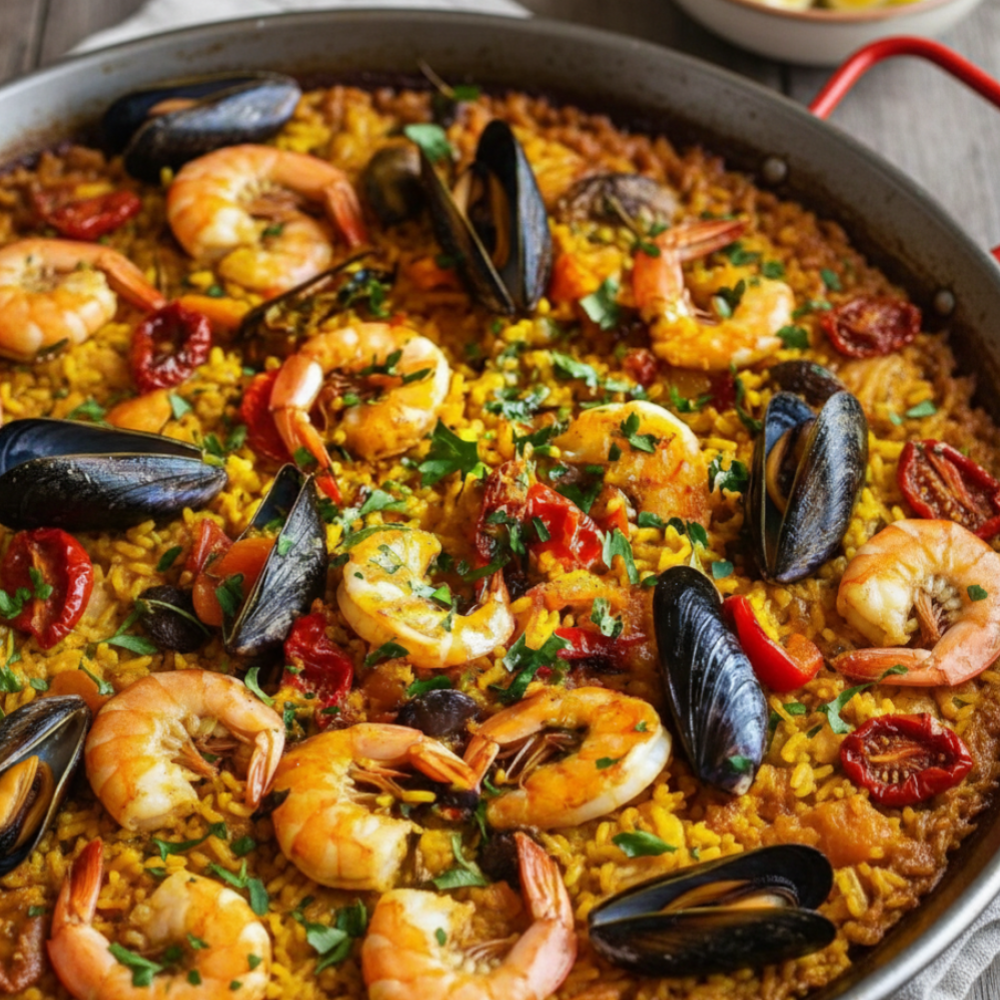
There are few dishes that capture the heart and soul of Spanish cuisine quite like paella. Imagine a vibrant platter, brimming with succulent seafood, fragrant rice, and the unmistakable golden hue of saffron. This isn’t just a meal; it’s an experience, a celebration of flavors, and a testament to the rich culinary traditions of Spain. Today, we’re diving deep into the art of creating an authentic Spanish Paella with Seafood, a dish that will transport your taste buds straight to the sunny shores of Valencia.
The Magic of Authentic Spanish Paella with Seafood
What Makes Paella So Special?
Paella is more than just a rice dish; it’s a cultural cornerstone, deeply woven into the fabric of traditional Spanish cuisine. Originating in the fields of Valencia, it was historically a humble meal cooked over an open fire, bringing families and friends together. What makes it so special is its communal nature, its captivating aroma that draws everyone to the kitchen, and the sheer delight of scooping up a spoonful of its perfectly cooked ingredients.
The beauty of paella lies in its ability to combine simple, fresh ingredients into something extraordinary. The method of cooking, allowing the rice to absorb all the rich flavors of the broth and ingredients, creates a dish that is both comforting and exhilarating. Every grain of rice tells a story, imbued with the essence of the sea and the earth.
Essential Ingredients for the Perfect Paella
Crafting a truly memorable paella begins with selecting the right ingredients. Quality makes all the difference, especially when aiming for that truly authentic paella recipe.
Choosing the Right Rice (Bomba vs. Arborio)
The star of any paella is undoubtedly the rice. For an authentic result, you absolutely must seek out Bomba rice. Why Bomba? This short-grain variety is often called “the rice with an accordion effect” because it expands in length during cooking without bursting, allowing it to absorb an incredible amount of liquid and flavor without becoming sticky or mushy. It maintains its structure beautifully, creating that ideal, slightly al dente texture.
While Arborio rice (commonly used for risotto) is also a short-grain rice, it behaves differently. Arborio releases more starch, resulting in a creamier texture unsuitable for paella, which should have distinct, separate grains. So, for your seafood paella valenciana, make the effort to find Bomba rice – it’s worth it!
The Importance of Saffron
Saffron is the golden heart of paella. These precious crimson threads, harvested from the crocus flower, impart a distinct floral aroma, an earthy depth, and that iconic, brilliant yellow color to the rice. Don’t be tempted to skip it or substitute it with turmeric; saffron’s unique flavor profile is irreplaceable. For true Spanish saffron rice, a pinch of good quality saffron, bloomed slightly in warm broth, is essential.
“Saffron isn’t just about color; it’s the soul of paella, infusing every grain with an aromatic richness that defines the dish.”
Fresh Seafood Selection
For a spectacular seafood paella, the fresher your catch, the better. Think about a vibrant medley that offers a variety of textures and flavors. Here’s what I recommend:
- Shrimp: Large, head-on (if possible, for more flavor in the broth) or peeled and deveined.
- Mussels and Clams: Fresh, scrubbed, and debearded. They open beautifully during cooking, releasing their briny liquor into the rice.
- Calamari: Rings or small tentacles, which tenderize wonderfully.
- Firm White Fish: Such as cod or monkfish, cut into bite-sized pieces.
- Scallops: Optional, but add a touch of luxury.
Ensure all your seafood is responsibly sourced and impeccably fresh for the best taste.
Step-by-Step Guide to Cooking Seafood Paella
Now for the exciting part! Gather your ingredients and your paellera pan – that wide, shallow pan with two handles, crucial for achieving even cooking and the coveted socarrat.
Preparing the Sofrito
The sofrito is the aromatic foundation of your paella. It’s a slow-cooked base that builds layers of flavor.
- Heat a generous amount of olive oil in your paellera over medium heat.
- Add finely chopped onion and sauté until translucent, about 5-7 minutes.
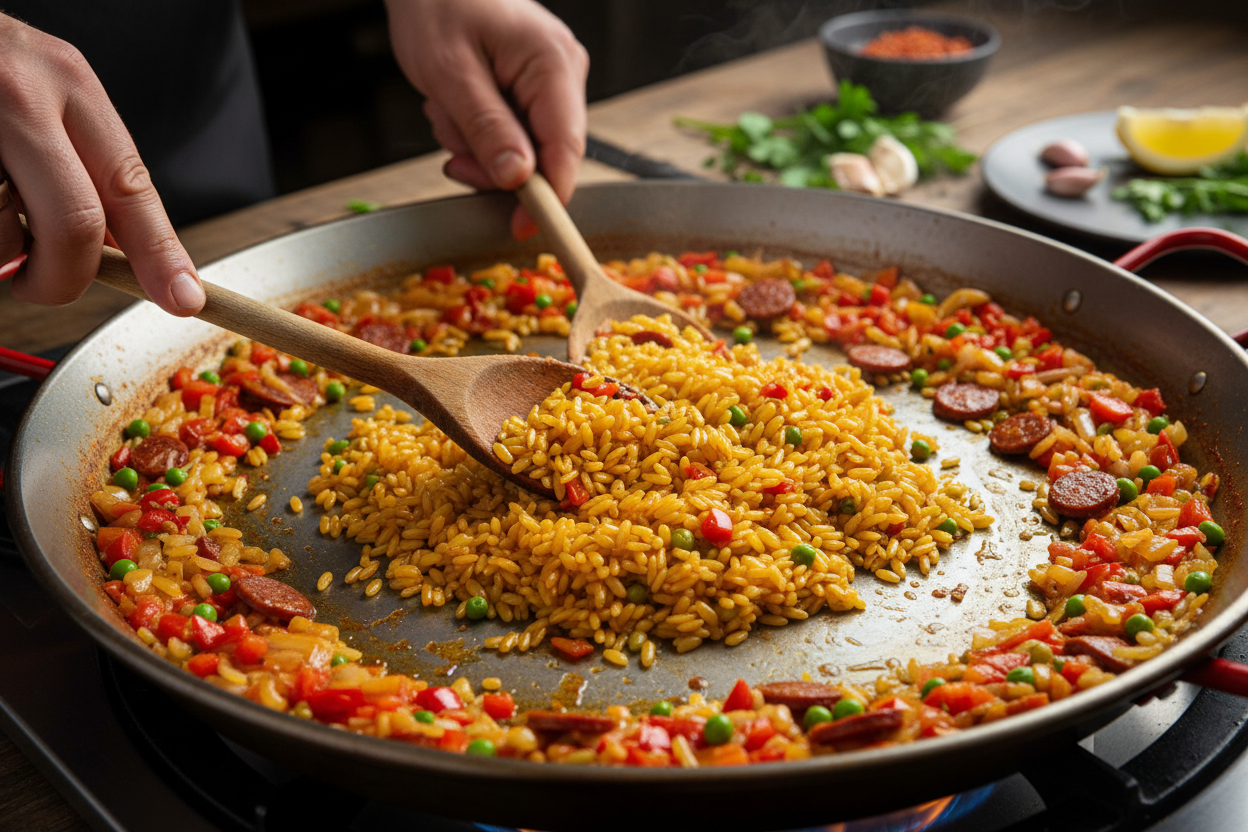
- Stir in minced garlic, diced red bell pepper, and a ripe, grated tomato (or tomato paste). Cook gently, stirring occasionally, until the mixture is thick and fragrant, about 10-15 minutes. This slow cooking allows the flavors to meld beautifully.
- If desired, you can briefly sear any tougher seafood like calamari or firm fish chunks in the sofrito base before adding other ingredients, then set them aside.
Adding the Broth and Rice
This is where the magic truly begins to happen. A good quality seafood broth is non-negotiable for a deeply flavored paella.
- Pour your rich seafood broth into the paellera with the sofrito. Add a pinch of saffron threads (bloomed in a little warm broth beforehand, if preferred) and bring the mixture to a simmer. Season with salt and pepper to taste, remembering that the broth should be slightly salty at this stage as the rice will absorb some of it.
- Evenly sprinkle the Bomba rice over the entire surface of the pan. Do not stir the rice once it’s added. Stirring releases starch, which we want to avoid for the distinct grain texture.
- Arrange your seafood (shrimp, mussels, clams, calamari, fish pieces) artfully on top of the rice. Push some pieces gently into the rice so they cook evenly.
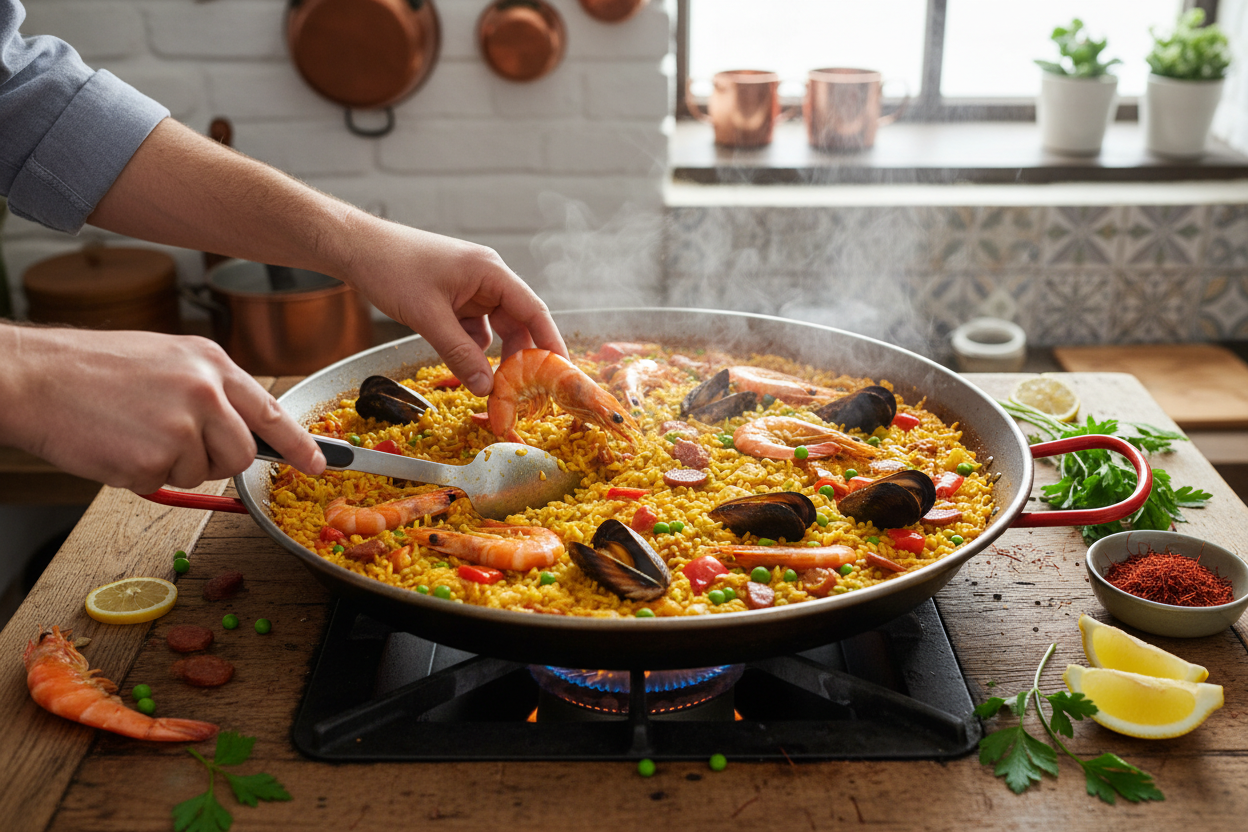
- Maintain a steady, medium simmer for about 10 minutes, allowing the rice to absorb the broth and the seafood to cook through. As mussels and clams open, their juices will further enrich the paella. Discard any shellfish that do not open.
- Reduce the heat to low, cover loosely with foil, and continue to cook for another 8-10 minutes, or until most of the liquid has been absorbed and the rice is almost cooked.
Achieving the Perfect Socarrat
The socarrat is arguably the most coveted part of paella – a crispy, caramelized crust of rice that forms at the bottom of the pan. It’s a sign of a well-made paella and a delightful texture contrast to the tender rice above.
To achieve this:
- Once the rice has absorbed most of the liquid and your paella is nearly done, turn up the heat to medium-high for 2-3 minutes. Listen carefully for a crackling sound, which indicates the rice at the bottom is toasting.
- You might even catch a slight, delicious aroma of toasted rice. Keep a close watch to prevent burning. Do not stir!
- Once you hear the crackle and smell that wonderful toastiness, remove the paella from the heat.
- Cover the paellera with foil or a clean kitchen towel and let it rest for 5-10 minutes. This allows the residual steam to finish cooking the rice and helps the flavors meld.
Serving paella with a perfect socarrat is a true testament to mastering the art of “how to make socarrat.” It’s a delightful textural surprise that many consider the best bite!
Serving and Pairing Suggestions
Serving paella is a communal event. Bring the entire paellera to the table and let everyone serve themselves directly from the pan. Garnish with fresh lemon wedges and chopped fresh parsley. A squeeze of lemon brightens the flavors beautifully.
For drinks, a crisp, dry Spanish white wine like Albariño or Verdejo is an excellent choice. Alternatively, a chilled rosé or even a light-bodied red like a Garnacha would complement the seafood without overpowering it. And, of course, a glass of refreshing sangria is always a festive companion to this magnificent dish.
Crafting a Spanish Paella with Seafood is a labor of love, but the reward is immense: a dish that’s visually stunning, incredibly flavorful, and perfect for sharing. It’s a journey into the heart of Spanish culinary tradition, and one that is sure to impress.
If you loved diving into the world of authentic Spanish flavors with us, be sure to follow our page for more delicious recipes and culinary adventures! You can find us at https://www.facebook.com/profile.php?id=61568538666337.
Authentic Spanish Paella with Seafood
Ingredients
- 2 tbsp Extra virgin olive oil Use a high-quality Spanish olive oil if possible
- 1 medium Yellow onion Finely diced
- 3 cloves Garlic Minced
- 2 medium Tomatoes Grated or finely chopped
- 1 cup Roasted red peppers Sliced into strips
- 1.5 cups Bomba rice Short-grain Spanish rice
- 1 pinch Saffron threads Crushed
- 1 tsp Smoked paprika Sweet or bittersweet
- 4 cups Seafood broth Warmed
- 1 lb Large shrimp Peeled and deveined, tails left on
- 1 lb Mussels Cleaned and debearded
- 1/4 cup Fresh parsley Chopped, for garnish
Instructions
- Heat the extra virgin olive oil in a wide paella pan or a large, wide skillet over medium heat.
- Add the diced onion and minced garlic, sautéing until the onion is soft and translucent, about 5 minutes.
- Stir in the chopped tomatoes, sliced roasted red peppers, and smoked paprika. Cook for 5 minutes until the mixture breaks down into a thick paste known as sofrito.
- Sprinkle the Bomba rice evenly across the pan and cook for 2 minutes, stirring gently to toast the grains.
- Crush the saffron threads and add them to the warm seafood broth. Pour the infused broth into the pan. Do not stir the rice from this point forward.
- Bring the liquid to a gentle boil, then reduce the heat to a simmer. Cook uncovered for 10 minutes.
- Nestle the shrimp and mussels evenly into the rice. Continue to simmer for another 8 to 10 minutes until the seafood is cooked through, the mussel shells open, and the liquid is mostly absorbed. Discard any mussels that do not open.
- Increase the heat to medium-high for 1 to 2 minutes to create the socarrat, the crispy crust at the bottom of the pan. Listen for a faint crackling sound and watch carefully to avoid burning.
- Remove the pan from the heat, cover it loosely with foil or a clean kitchen towel, and let the paella rest for 5 minutes.
- Garnish with freshly chopped parsley and serve immediately directly from the pan.
For more daily recipes and tips, follow us on Facebook!
Click here to join our community!